
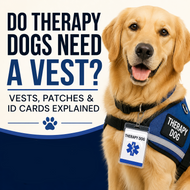
Do Therapy Dogs Need a Vest? Vests, Patches & ID Cards Explained
Posted by WorkingServiceDog on Jun 1st 2026
The short answer is no. Therapy dogs are not required to wear a vest or special identification. However, many handlers choose to use them because they provide clear identification, improve visibility, and help create a professional appearance.
From volunteer activities and community events to everyday outings, therapy dog vests, patches, and identification cards can help communicate a dog's role in a simple and recognizable way. This guide explains why many therapy dog teams choose visible identification and what options are commonly used.
Why Many Therapy Dog Teams Choose a Vest
A therapy dog vest helps communicate that a dog has a specific role. It can make interactions smoother by providing clear identification and reducing confusion about whether the dog is simply a pet.
Many handlers choose a therapy dog vest because it offers an easy and visible way to identify their dog while creating a more professional appearance.
For volunteer teams, community programs, and individual handlers alike, a well-marked vest can make a therapy dog easier to recognize while helping maintain a consistent look.
What Makes a Good Therapy Dog Vest?
A good therapy dog vest does not need to be complicated. Most handlers want something that is comfortable for the dog, easy for people to read, and durable enough to hold up over time.
Clear identification is often the most important feature. A vest should make it easy for others to recognize the dog's role without being overly busy or difficult to read.
- Comfortable fit that allows natural movement
- Easy-to-read patches and identification
- Lightweight materials for everyday use
- Durable stitching and hardware
- Space for patches or custom identification
The best vest is one that fits the dog well and clearly communicates the dog's role while remaining comfortable during regular use.
Common Therapy Dog Patches
Patches are one of the most popular ways to identify a therapy dog. Some handlers prefer a simple "Therapy Dog" patch, while others choose wording that encourages friendly interaction.
Common choices include:
- Therapy Dog
- Therapy Dog - Please Pet Me
- In Training
- Paw-print designs
- Custom organization patches
Paw-print designs remain popular because they are easy to recognize and help create a welcoming appearance. Volunteer groups and organizations often choose custom patches to create a consistent look across multiple teams.
You can browse available therapy dog patches to compare different styles and identification options.
Beyond the Vest: Therapy Dog ID Cards
Some handlers choose to pair their vest with a matching therapy dog ID card.
While ID cards are not required, they can help keep information organized and create a consistent appearance alongside a vest and patches. Many handlers appreciate having a convenient way to keep identification details together.
For teams that participate in volunteer activities or community events, matching identification can provide an additional level of organization and professionalism.
Choosing the Right Identification Setup
There is no single correct way to identify a therapy dog. Some handlers prefer a vest alone, while others choose patches, ID cards, or a combination of all three.
The right setup depends on how the dog is used, personal preferences, and the level of visibility desired. The goal is simply to choose identification that works well for both the handler and the dog.
Final Thoughts
Therapy dogs do not need a vest or special identification. However, many handlers choose visible identification because it helps communicate the dog's role and creates a more professional appearance.
Whether you choose a vest, patches, an ID card, or a complete matching setup, clear identification can help create smoother interactions and make a therapy dog easier to recognize in a variety of settings.